
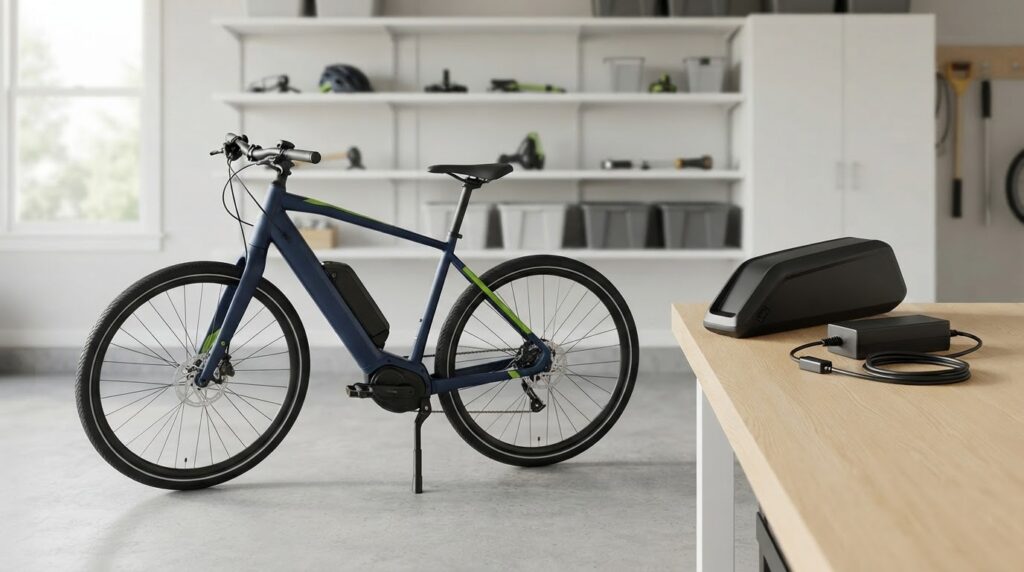
Lithium-ion batteries make electric bikes practical for commuting, recreation and everyday transport. They also need to be handled correctly. A damaged battery, an incompatible charger or unsafe charging conditions can increase the risk of overheating and fire.
The good news is that sensible buying, charging and storage habits can help reduce avoidable risks. This guide brings together practical advice from NSW Government and Fire and Rescue NSW for Australian e-bike owners.
Why e-bike battery safety matters
Most modern electric bikes use rechargeable lithium-ion battery systems. If a battery is faulty, damaged, modified or charged incorrectly, it can overheat and enter a dangerous failure process that may involve fire and the release of hazardous gases.
Battery incidents can develop quickly. Treat unusual heat, swelling, leaking, smoke, vapour or strong odours as warning signs, not as issues to monitor while continuing to ride or charge.
How to charge an e-bike battery safely
- Use the correct charger. Use only the charger supplied with the e-bike or one specifically recommended and approved by its manufacturer for that battery. A plug fitting the socket does not prove compatibility.
- Choose a safer charging location. Where possible, charge in an open, well-ventilated area such as a garage or shed, away from living areas, combustible materials, doorways and exits.
- Use a hard, non-combustible surface. Keep the battery and charger on a stable surface such as concrete or tiles, not on a bed, sofa, carpet or other easily ignited material.
- Stay nearby and stay awake. Do not charge while you are asleep or away from home. Follow the manufacturer’s instructions and disconnect the charger when charging is complete.
- Keep the area clear. Keep paper, clothing, bedding, curtains, fuels and other combustible items away from the battery and charger.
- Check the equipment. Do not use damaged cables, plugs, chargers or batteries. Stop charging if you notice unusual heat, noise, smell or other abnormal behaviour.
Fire and Rescue NSW recommends charging away from living spaces and exits, using hard surfaces, and disconnecting the battery once fully charged. Always follow the instructions supplied for your particular e-bike as well.
Where should you store an e-bike battery?
Store the battery in a cool, dry, well-ventilated place, away from direct sunlight, heat sources, moisture and anything that could burn. Avoid placing it near an exit or in a location that could block an escape route.
For larger e-bike batteries, NSW guidance recommends storage and charging in a garage, shed or carport away from living areas where practical. Make sure smoke alarms are working in areas where batteries are charged or stored.
If your manufacturer provides specific storage instructions, including guidance for periods when the bike will not be used, follow those instructions.
Warning signs of a damaged or unsafe battery
Stop using and charging the battery if you notice any of the following:
- Swelling, bulging or a change in the battery’s shape
- Cracks, dents, punctures, crushing or other physical damage
- Leaking, unusual odours, vapour or smoke
- Excessive or unexpected heat
- Unusual sounds or visible discolouration
- Evidence that the battery has been wet, submerged or exposed to fire
- A sudden change in performance, such as unusually rapid loss of charge
Do not attempt to open, repair, modify or keep using a suspect battery. Arrange assessment or replacement through the e-bike manufacturer, supplier or a suitably experienced e-bike technician. Do not use a second-hand battery of unknown history.
What should you do if an e-bike battery smokes or catches fire?
Your safety comes first. Do not touch, carry or try to move a battery that is smoking, venting gas or on fire.
- Move away immediately and warn other people nearby.
- Evacuate the building or area and keep clear of smoke and vapour.
- Call Triple Zero (000) and tell the operator that a lithium-ion battery is involved.
- Do not re-enter the area until emergency services say it is safe.
Lithium-ion batteries can reignite after an initial fire has been extinguished. Leave the response to emergency services and follow their instructions.
Choosing a replacement battery or charger
Use only a battery and charger specified as compatible with your exact e-bike model. Check with the bike manufacturer or an authorised service provider before replacing either component. Do not assume that a battery is suitable simply because it fits the frame or has a similar connector.
When buying an e-bike, battery or charger, look for the relevant electrical safety approval marking and ask the retailer for information about safe use, charging, storage, fire prevention and disposal.
In NSW, product safety requirements for specified lithium-ion battery-powered e-micromobility products, including applicable e-bikes, batteries and chargers, commenced on 1 February 2026. The requirements include relevant testing, certification and electrical safety marking. Requirements depend on the product category and applicable standard, so buyers should check the specific model rather than assume every product is covered in exactly the same way.
How to dispose of an e-bike battery
Never put a lithium-ion battery in household rubbish, kerbside recycling or hard-waste collections. Use an appropriate battery recycling or council collection service and follow its acceptance rules.
Important: a damaged, swollen, hot, leaking or otherwise compromised battery should not be taken to an ordinary battery drop-off point. Follow the specific advice from Fire and Rescue NSW or your local council for safe handling and disposal of damaged batteries.
E-bike battery safety checklist
- Use only the manufacturer-recommended battery and compatible charger.
- Charge on a hard surface in a clear, ventilated area away from exits.
- Never charge while asleep or away from home.
- Disconnect the charger when charging is complete.
- Keep batteries away from heat, moisture and combustible materials.
- Keep smoke alarms working near charging and storage areas.
- Stop using any battery that is damaged, unusually hot, swollen, leaking or emitting an odour, vapour or smoke.
- Never modify or attempt a DIY repair to a lithium-ion battery.
- Use an appropriate battery recycling service, not household bins.
Frequently asked questions
Can I charge my e-bike battery overnight?
No. Fire and Rescue NSW advises against charging lithium-ion batteries while sleeping or when nobody is home. Stay nearby while charging and disconnect the charger when the battery is fully charged.
Can I use a different charger if the plug fits?
No. The charger must be compatible with the exact battery and e-bike system. A connector that fits does not confirm that the voltage, current or charging system is suitable.
Is it safe to charge an e-bike battery inside the house?
NSW fire safety guidance recommends charging larger e-bike batteries outside living areas, in an open area such as a garage or shed where practical. Keep the battery away from exits and combustible materials, and follow the manufacturer’s instructions.
What if my e-bike battery gets wet?
Do not charge or use a battery that has been exposed to water or has signs of water damage. Seek advice from the manufacturer or a qualified e-bike technician about safe assessment and replacement.
Can a swollen battery still be used?
No. Stop using and charging it. Do not puncture, open, compress or attempt to repair it. Follow official advice for keeping and disposing of damaged batteries safely.
Make battery safety part of every ride
A few careful habits can make a meaningful difference: use compatible equipment, charge in a suitable location, keep batteries away from combustible materials and act immediately if something seems wrong. If you are researching your next ride, explore the electric bikes available at E-Rev Cycles and check the product information for the model you are considering.
This article is general safety information, not a substitute for the instructions supplied with your e-bike or advice from the manufacturer, a qualified technician or emergency services. Safety requirements can vary by product and jurisdiction.